
September 30, 2026
Corporate Hunger Games: Ghosted for a Month. Called in Five Minutes.
0 views · Counting since 7 Oct 2026
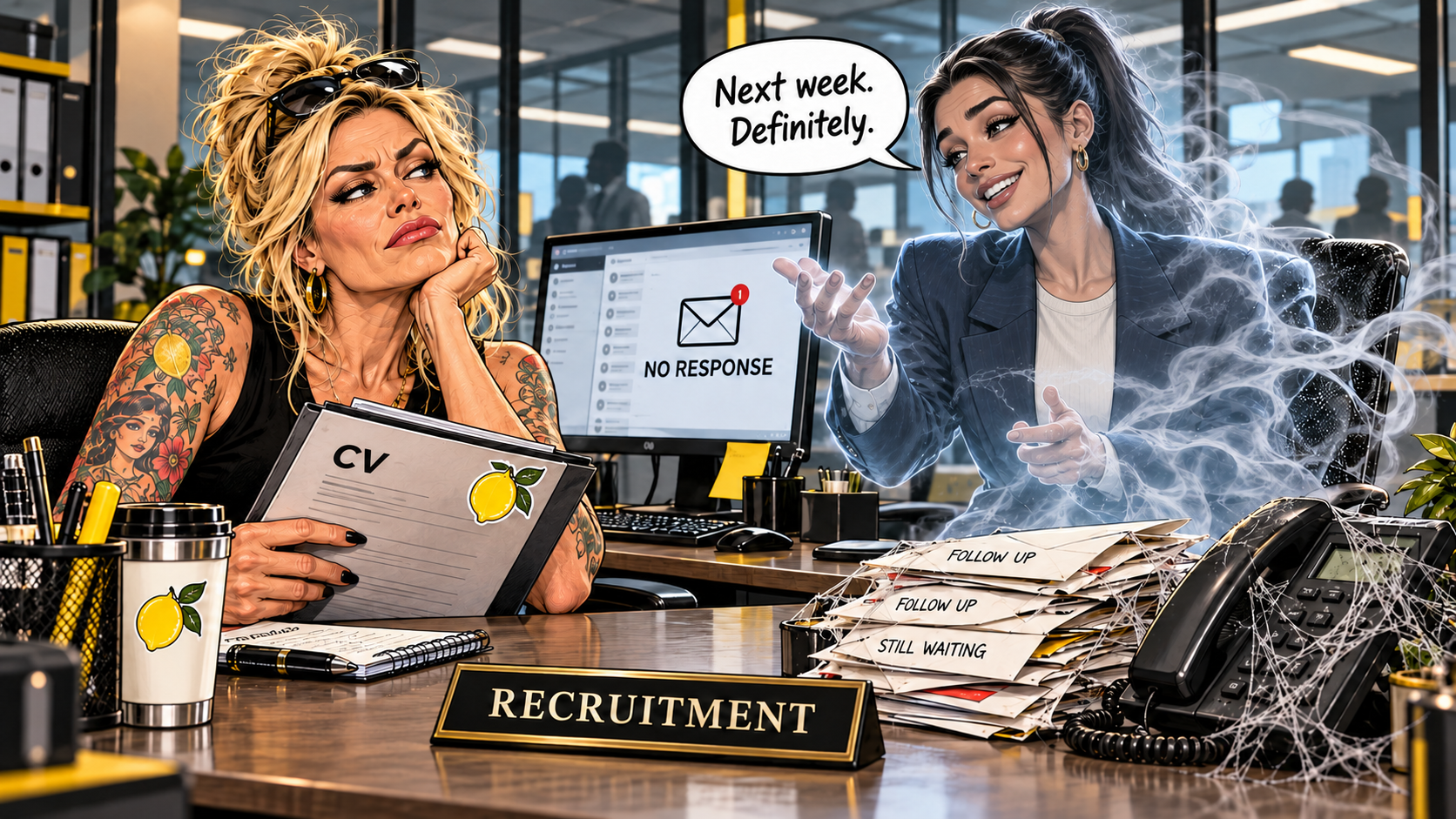
I have discovered how to get a recruiter to call you back. Sadly, it involves an audience of over 380,000 people. A bit excessive when all you wanted was an email.
Welcome to the Corporate Hunger Games. Please leave your dignity at reception. Someone will be in touch. Probably next week.
Russell Tobin contacted me about a role that was an excellent match for my background. We had a call. They were positive about my profile. They wanted to represent me. Lovely. For a brief, dangerous moment, I allowed myself to believe that recruitment might involve recruiting.
I supplied the information, signed the representation paperwork, and worked with the recruiter to tailor my CV to the hiring manager’s requirements. My CV received bespoke tailoring. I received a subscription to “next week.”
“Next week.”
“Your CV is on the hiring manager’s desk.”
“They’re arranging the interviews.”
My CV was on a desk. Interviews were being arranged. Things were progressing. Somewhere in this thriving little narrative, the only person not moving forward was me.
Then the hiring manager was on holiday. An update would follow the next week. In my original post, I described three weeks since that promise. Altogether, I had spent roughly a month chasing a response on LinkedIn and by email. Enough time for my optimism to expire without even receiving a renewal notice.
I wasn’t asking for the job, a pony, or a ceremonial entrance into the boardroom. I was asking whether the role still existed.
So I posted about the experience on LinkedIn. Named the firm. Didn’t name the recruiter. Explained that rejection was fine. A paused role was fine. Being invited into a process and then abandoned in it was considerably less fine.
Five minutes later, my phone rang.
Behold. Telecommunications.
After weeks of silence, suddenly we had contact. Apparently my messages had needed a public audience before they could be delivered.
The recruiter said she had no internet connection. This was difficult to square with the LinkedIn activity I’d been seeing. Perhaps her laptop had been posting independently. Terrific initiative. Put it forward for the role.
She also said her aunt had died the day before. I was sorry to hear that. But yesterday’s bereavement did not explain the weeks of unanswered messages before it.
Then she said my post would get her into trouble. She began crying and wanted me to take it down. From my end, it felt like I was being made responsible for her distress. We had gone from me asking for an update to me being asked to manage the consequences of asking for an update.
An unexpected extra stage in the hiring process: unpaid emotional support.
I wasn’t taking the post down.
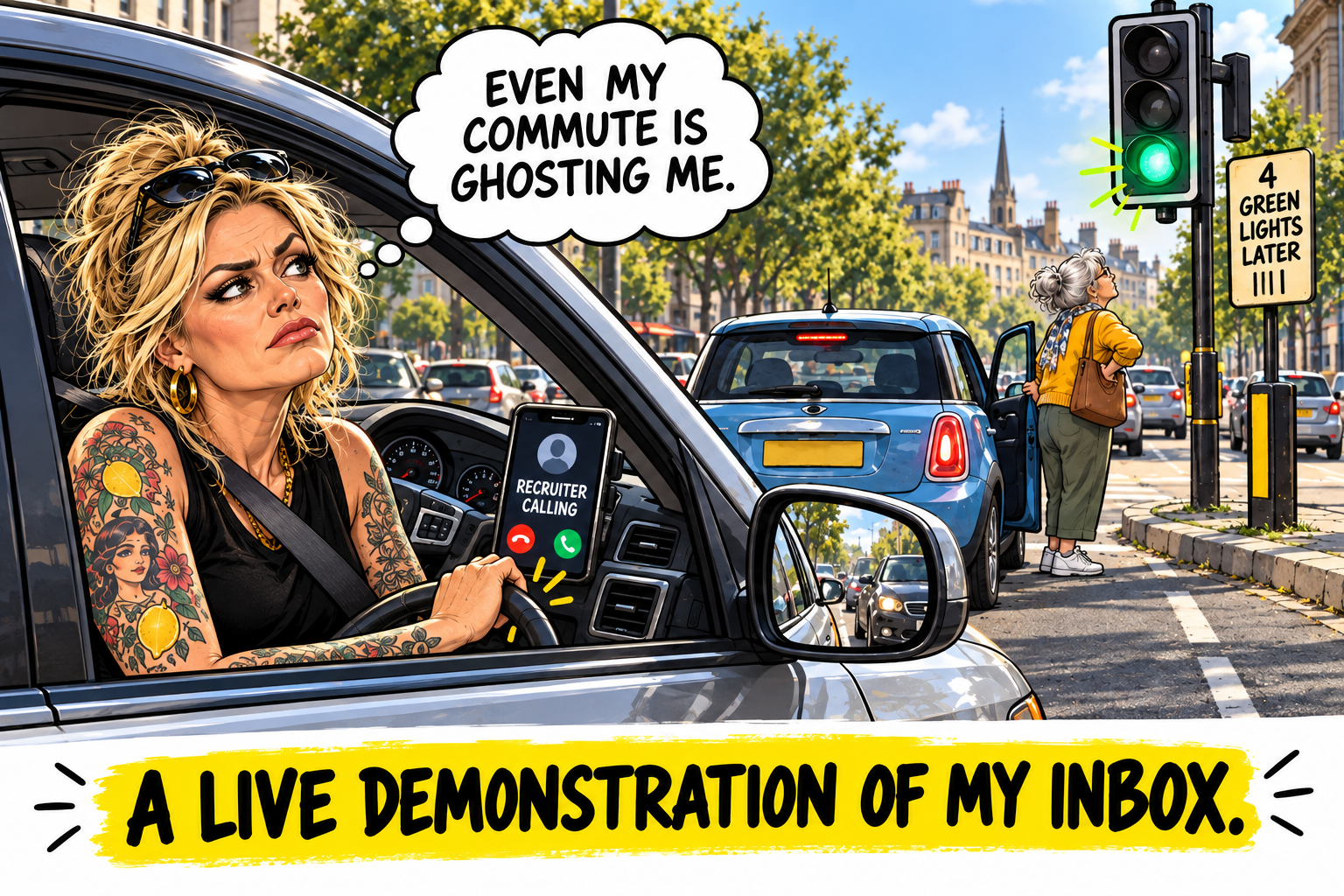
All this was happening while I was in my car behind a woman who had ignored four green lights and kept getting out to inspect the traffic signal. Four. Green. Lights. Apparently she wanted a second opinion from the bulb.
I was yelling and honking. My contribution to road diplomacy was not going to win an award.
In front of me: someone refusing to move despite repeated signals. On the phone: someone who had ignored repeated messages. I had somehow been booked into a live demonstration of my own inbox.
Meanwhile, the post went on to receive over 380,000 views, 3,500 reactions, and 584 comments. I had wanted one reply. I got a small civilisation.
Some recruiters were furious. Calling out a poor recruitment experience? Publicly? Did I not understand that this could make me harder to hire?
What a charming sales pitch for the profession. Report bad treatment and risk getting more of it. Five stars. Would nervously recommend.
Apparently the candidate must be resilient, transparent, authentic, and brave. Until she is transparently authentic about the recruitment process. Then she needs to work on her attitude.
Other recruiters agreed with me. They recognised the problem and said the system was broken. We had useful conversations and funny exchanges. Those people gave me some hope. The trolls also arrived, because no LinkedIn discussion is complete without someone mistaking a comment box for a throne.
Then came a private message from someone who had applied for the same role. They said they had also been promised interviews and then ghosted. A familiar plot. Different candidate. Same disappearing act.
Next, Russell Tobin’s Benelux country manager messaged me. Could he call? Absolutely. At this point, a scheduled conversation felt practically decadent.
We spoke the following day. It was a lovely conversation. He listened, agreed with my point of view, apologised, and said he would investigate what was happening with the role. I appreciated that. Somebody had finally arrived with an actual response.
The explanation I received: the role had been put on hold.
“The role is on hold.” Five words. I had tailored an entire CV. Surely someone could have tailored that sentence into an email.
I wrote a follow-up post acknowledging the constructive conversation. Credit where it was due. I wanted the record to include the apology as well as the problem.
And then I never heard from Russell Tobin recruitment again.
The apology had excellent reception. The follow-through appears to have wandered back into the internet dead zone.
So here I am with LinkedIn’s cheerful green Open to Work frame. A tiny wreath around my face, commemorating the time I thought “they’re arranging interviews” meant someone was arranging interviews.
I can handle a no. I can handle a role being paused. I can even handle a recruiter telling me there is no news. What wears you down is being asked to invest time, encouraged to expect progress, and then left to keep knocking on a door nobody answers.
As I wrote in the original post, “I don’t have an update yet” is still an update. Radio silence isn’t.
If a public complaint can produce a phone call in five minutes, perhaps a private follow-up could occasionally earn a reply.
May the odds be ever in your favour. Apparently the odds improve once you bring 380,000 witnesses.
Read the original LinkedIn posts: the initial post and the follow-up.